BLOG
Why Two-Phase Direct-to-Chip is the Future of Data Centre Cooling
February 25, 2026 · Daniel Miodovnik
The data centre industry is currently navigating a chaotic transition period in thermal management. As chip densities push past the 1,000W barrier, its clear, air cooling needs to be replaced with liquid cooled systems.
However, the question of "what comes next?" remains debated. Operators are currently choosing between single-phase and two phase direct to chip and, immersion tanks.
While single-phase direct to chip is the current default, we believe**Two-Phase Direct-to-Chip (D2C)**emerges not just as a good option, but as the inevitable standard for high-performance AI.
The Physics: Hitting the "Sensible Heat" Ceiling
To understand why we believe Two-Phase Direct-to-Chip comes out on top, it’s helpful to distinguish between Sensible Heat and Latent Heat.
Single-phase cooling, such as standard water or glycol loops, relies onSensible Heat. You pump cool liquid over a hot plate, the liquid gets warmer, and you pump it away, where the heat can be offloaded for the liquid to be used to cool the chips once more. It is a linear exchange. As chips get hotter, you must pump the water faster.
Eventually, you hit a hydraulic wall. To cool a next-generation AI cluster using only sensible heat, the required flow rates become mechanically unmanageable. You risk pipe erosion, massive pumping energy costs, and diminishing returns. Furthermore, because these high-performance loops predominantly rely on water-based fluids for their thermal efficiency, they introduce a critical safety risk. A single leak can cause immediate, catastrophic electrical failure.
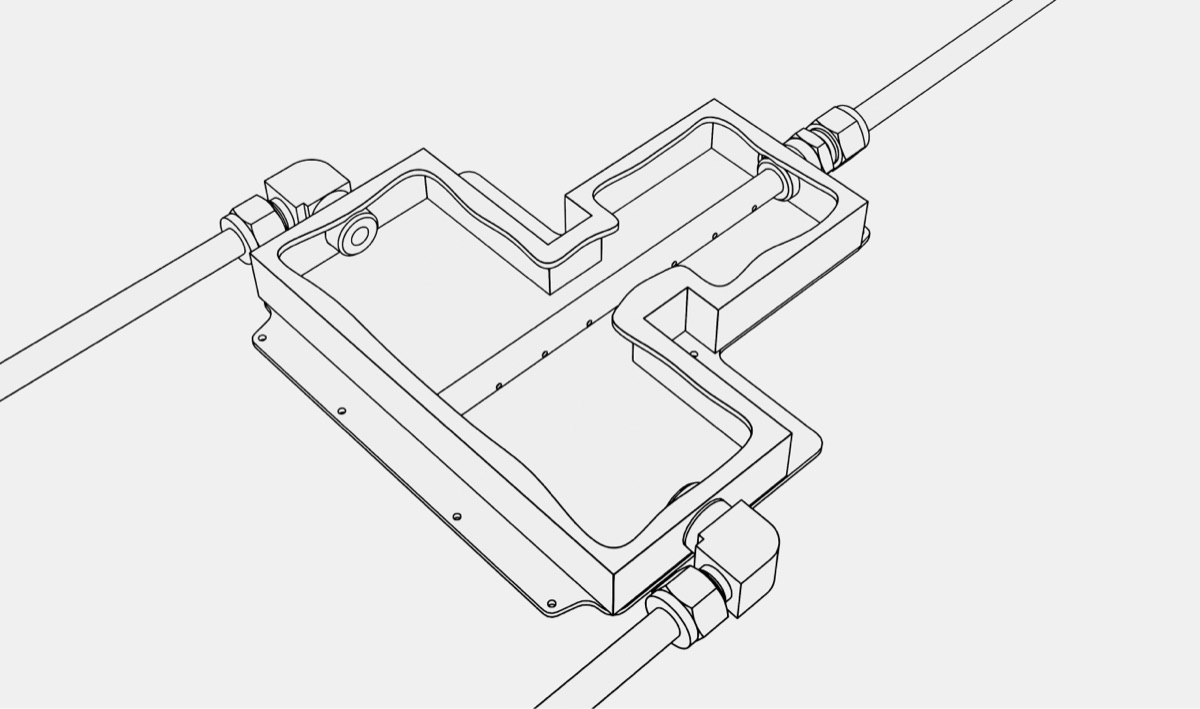
Two-Phase cooling relies on Latent Heat.This means instead of just getting warmer, the fluid boils, changing its phase from liquid to gas, directly at the heat source. The energy required to break molecular bonds and turn liquid into vapour absorbs roughly20 to 50 times more heat energythan simply raising the temperature of a fluid.
For AI workloads, which are characterized by violent spikes in power, this phase-change capability is critical. It provides an instant thermal buffer that single-phase simply cannot match.
The Form Factor: Precision vs. The "Bath"
If liquid is the future, why not just submerge the servers? Immersion cooling is effective, but it forces a radical and expensive change to the facility’s form factor.
Immersion requires turning the data hall into a wet industrial environment. It necessitates heavy floor reinforcement to support tanks filled with fluid, overhead cranes to service dripping servers, and a completely new operational playbook for technicians.
**Direct-to-Chip cooling offers the highest precision.**By keeping the fluid contained within a closed loop that targets only the hottest components (GPUs/CPUs), D2C delivers the thermal benefits of liquid without the logistical nightmare of open baths. It allows operators to retrofit extreme density into existing room layouts, preserving the standard rack-and-row architecture that the industry is built upon.
The Risk Reversal: Dielectric Safety & The GWP Advantage
Historically, operators have hesitated to adopt two-phase cooling due to valid concerns regarding safety and regulation. Legacy two-phase fluids relied heavily on PFAS substances also known as "forever chemicals" that are not only toxic to personnel and the environment but are also facing aggressive global bans. Orbital has eliminated this barrier by engineering ultra-low GWP, non-PFAS dielectric fluids. This allows data centers to leverage the superior thermal density of two-phase cooling without incurring regulatory debt.
The Thermodynamic Endgame
As the industry matures, the "single phase direct to chip vs. immersion" debate will likely settle into a compromise dictated by physics. Single phase direct to chip will remain useful for low-to-medium density. Immersion will find its niche.
But for the bleeding edge of AI, where rack densities approach hundreds of kilowatts and latency is everything, Two-Phase Direct-to-Chip offers the only path that balances extreme thermal performance with operational practicality.
Don't lock your facility into a cooling technology that is already hitting its ceiling. Contact our Sales DirectorSimon Cogginto discuss how our non-PFAS, Two-Phase cooling solution can future-proof your high-density racks.