Looking for our data
center products?
Go to Orbital IT"I want AI to do my laundry and dishes so I have more time for art and writing, not for AI to do art and writing so I have more time for laundry and dishes."
— Joanna Maciejewska
This famous quip touches on something profound about people's hopes for AI and its impact on their lives. When people talk about the technologies they hope are invented with these new capabilities, they talk about physical products.
Sundar Pichai often uses the washing machine as an example of a technology that changed his family's life growing up. It gave households around the world back a whole day a week — time spent in education, in paid work, with the people they love.
Abundance isn't measured in bits.
We need many more innovations like the washing machine. Global GDP per capita sits at roughly a sixth of America's — humanity needs to make a lot more stuff to close that gap, let alone push living standards higher in the west. And the working-age population is shrinking - so we need to produce a lot more, with a lot less.
It's our belief that AI is our best shot at solving this problem, by speeding up the invention and manufacture of physical products. We've held this view since founding the company in late 2022, when it was an unusual one. Our frontier AI team works on the core problems that have to fall for hardware design to genuinely accelerate. For example:
AI-accelerated simulators spanning quantum physics through fluid dynamics, so you can iterate in silico before committing to the real world. Our first models — for advanced materials — are world leading.
Building a pilot plant or synthesising a new superconductor doesn't give you many shots on goal — each experiment costs months and millions. Our autoresearch agents are sample efficient: they find the right answer in as few experiments as possible.
We have a more unusual belief though - that AI enables new types of hardware business. The major breakthroughs in modern AI have come from small, talent-dense teams. Traditional hardware R&D looks nothing like that — huge, siloed departments split across engineering disciplines. We think R&D at AI-native industrial companies will look more like the frontier AI labs: small, interdisciplinary teams using specialised agents, robotic labs and physical engineering sites to ship better products — faster, and at a fraction of the R&D cost. These companies will sell physical products, but operate like software companies.
We built Orbital Industries to be the first of these — we call them "AI Industrials". Our frontier AI team pushes the state of the art in physical AI; our materials, hardware and manufacturing teams use those models to design and ship products. We aim to be materially different.
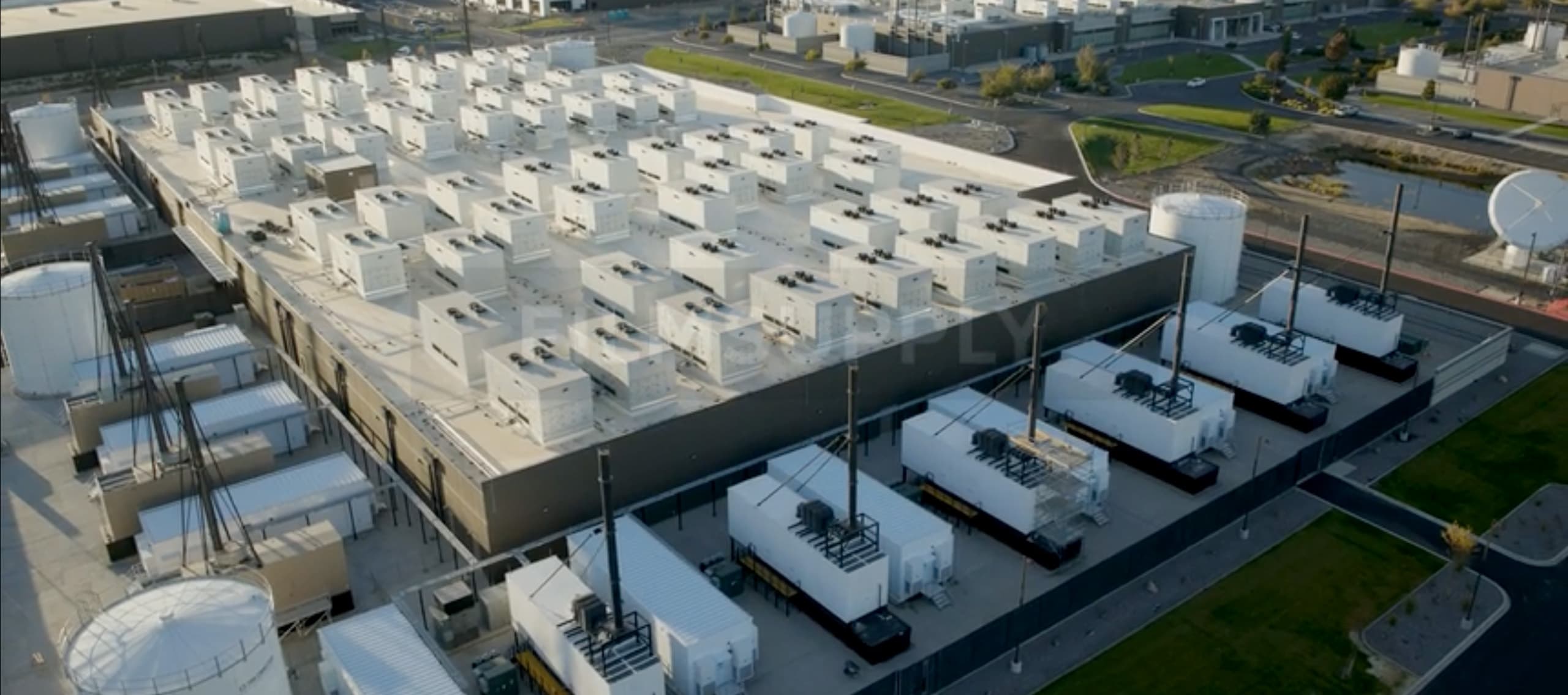
We started in AI data centers, where we've discovered entirely new molecular classes for high-density GPU cooling (you can see our data center products here). The ambition stretches well beyond data centers — to energy, semiconductors, and the materials and machines the rest of the economy is built from. Wherever a better physical product is possible, we want to build it.
And there's a stranger implication. AI Industrials may also be our best shot at superintelligence. Today's AI learns in two phases: first it mimics human language, then it's trained on tasks a computer can easily verify — maths, code, that sort of thing. But the universe itself isn't verifiable on a computer; the interesting bits are the experimental results that surprise and confound us. The physical reward signals that superintelligence needs will be generated at AI Industrials.