BLOG
The Supply Chain That Got Engineered Out of Existence
July 29, 2026 · Jonathan Godwin, CEO, Orbital Industries
In 1900, most of the world's food supply relied heavily on a single desert in Chile. This limited supply chain seemed like a fact that was outright unavoidable. But thirteen years later, a chemical company made that fact irrelevant. AI infrastructure is now accumulating critical dependencies with the same shape, and the same assumption that they're permanent. So how do we learn from the lessons of the past?
Every era has inputs it treats as facts of geography, and for the last decades of the nineteenth century, fixed nitrogen was one of them. Crops need it, soil exhausts it, and by 1900 the world was farming harder than manure and rotation could replenish. Gunpowder and explosives competed for the same resource, and nearly all of the supply came out of one place: sodium nitrate deposits in the Atacama Desert, shipped around Cape Horn to the farms and munitions works of Europe and America.
Supply was scarce against demand, and by any measure this wasn't a minor exposure. Peru's guano islands had already been mined to depletion in a few decades. Chile fought a war with Peru and Bolivia over the nitrate provinces and won, and by the 1890s it controlled roughly four fifths of the world's supply of usable nitrogen. By 1890 the duty on saltpeter accounted for around half of all Chilean government revenue, and it stayed there for nearly three decades. Everyone understood this was a major fragility, and yet the solutions proposed were, for many years, to find ways to work with the limited supply.
The default responses were the ones you'd recognize from any modern supply chain review: stockpile, diversify, secure the shipping lanes, negotiate access. The dependency was treated as something to be managed, because managing it was seemingly the only available move.
The breakthrough
In September 1898, William Crookes stood up in front of the British Association for the Advancement of Science and told the audience that this wasn't good enough, and that the wheat-eating world was heading for starvation on current trends. "It is the chemist who must come to the rescue of the threatened communities," he said.
On July 2, 1909, Fritz Haber demonstrated the answer in a lab in Karlsruhe: it was possible to pull nitrogen out of the air. Combine air with hydrogen under heat and pressure over a catalyst, and out comes liquid ammonia. His apparatus produced it drop by drop, at about 125 milliliters an hour.
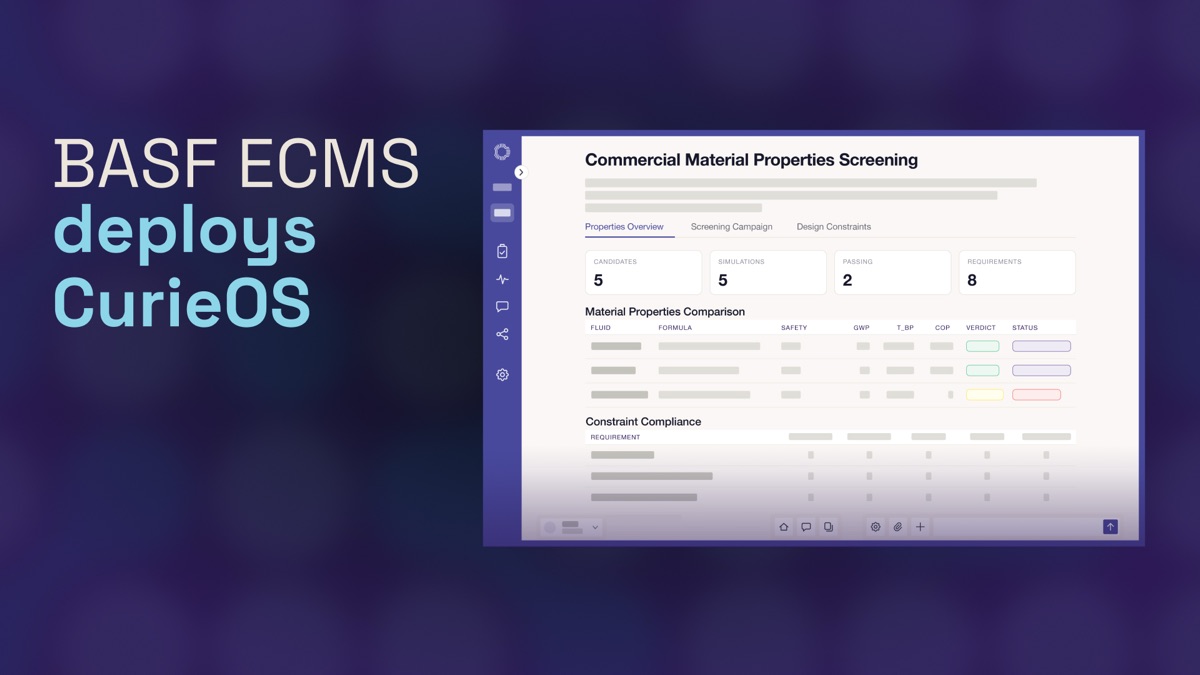
BASF bought the process and gave it to Carl Bosch, a chemist who had trained as a metallurgist, and the lab result promptly met industrial reality. The first high-pressure reactors burst. Bosch worked out why: hot pressurized hydrogen was leaching the carbon out of the steel, leaving the vessel walls soft and brittle from the inside. He redesigned the reactor with a soft iron lining and vented walls, and in doing so more or less founded high-pressure chemical engineering. In parallel, Alwin Mittasch ran what may be the first great high-throughput screening program in history: roughly 2,500 candidate materials across some 6,500 experiments, searching for a catalyst cheap enough to matter. The eventual answer was iron, promoted with alumina and potassium oxide, and it's essentially the same catalyst the industry uses today, more than a century later.
With all the problems worked through, the Oppau plant then came online in September 1913, and within a year it was making 40 tons of ammonia a day. With this discovery, the most critical supply chain in the world had stopped being a supply chain issue at all.
Parallels today
The reason I'm writing about this today is because the history feels current. AI infrastructure has quietly assembled its own Atacamas. Advanced packaging capacity concentrated in a handful of Taiwanese fabs, high-bandwidth memory from three major suppliers, power rationed by interconnection queues, and grid transformers on four-year lead times. Each of these gets discussed the way Chilean saltpeter was discussed in 1900: as a fact of the landscape, to be hedged, stockpiled, and negotiated around. The entire discipline of AI supply chain strategy is, at present, old-fashioned saltpeter thinking.
But the nitrogen story challenges us to think differently and consider that these are not facts of geography, they're unsolved chemistry and engineering problems wearing geography's costume. The atmosphere was always 78% nitrogen; the constraint was never the supply of the element but the absence of a defined engineering process. And the process didn't come from one invention alone. It came from years of reactor metallurgy and six and a half thousand catalyst experiments, funded by a company that decided the dependency was a problem rather than a condition.
And therein lies the answer. If we're drawing parallels to today, we're in a much better position than we were in 1913. Mittasch's search took three years because every candidate had to be physically synthesized and tested. That search loop, materials in, performance out, is exactly what AI models now compress, in some domains by orders of magnitude. The tools for experimenting your way off a dependency have never been cheaper, more efficient, or more effective.
Surviving the last century's fragile supply chain wasn't about securing the best access to Chilean nitrates, it came down to who made that access irrelevant. Somewhere in today's list of managed dependencies, the same opportunity is sitting in plain sight, waiting for someone to treat it as an engineering problem instead of geography.