BLOG
The Real Math Behind Modular Datacenters
August 13, 2026 · Orbital Team
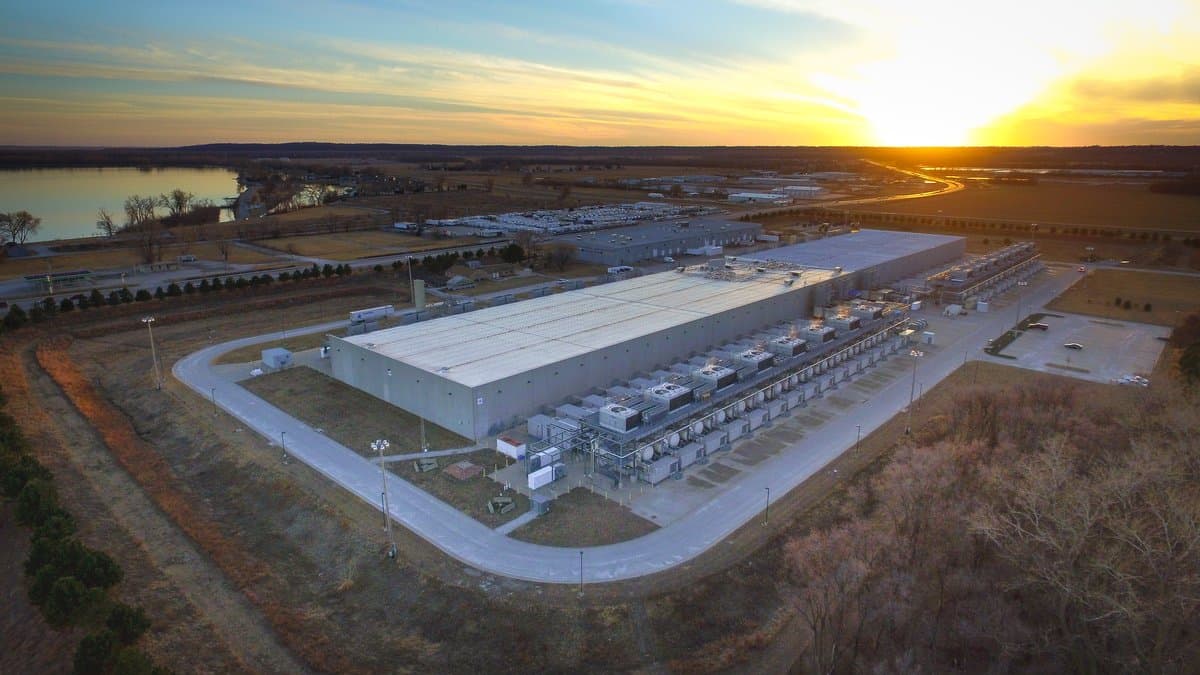
Photo: Chad Davis, CC BY 2.0
The datacenter construction industry is running into a wall that money alone can't solve: there aren't enough electricians, pipefitters, and skilled trades to build capacity at the pace the market wants it.
SemiAnalysis published a comprehensive deep-dive recently on how the industry is responding, largely through modular construction: prefabricating everything from wall panels to entire power rooms in factories, then shipping them to site rather than building in place. This thorough piece lines up with why Nvidia has backed Orbital to help accelerate GPU deployments. We encourage you to read the full article, but we are highlighting what we believe matters. Unless a different source is noted, the figures and claims here come from SemiAnalysis's own reporting and Industrials Model, and can be verified against the original article linked throughout and at the bottom of this page.
The labor problem
A single 50 MW facility demands roughly 600,000 construction hours and 300 skilled workers at peak, and that math multiplies across dozens of sites going up at once. Crusoe needed over 9,000 workers for its Abilene campus and had to raise wages 30% just to attract enough of them. Electricians alone represent 30-40% of total construction man-hours on a datacenter project, and an acute electrician shortage is expected to emerge in 2027, concentrated in Texas and Ohio, where the buildout is heaviest.
Modular construction is the industry's main response. SemiAnalysis's Industrials Model now tracks over 61 GW of modular capacity across 1,000+ sites, and estimates modular penetration will reach 30%+ of live capacity by the end of 2028.
What 'modular' actually means
Two terms get used interchangeably but aren't the same. Prefabrication is the broader concept: anything manufactured off-site and delivered ready to install. Modular is narrower: standalone units that ship complete and bolt together on-site. Every modular unit is prefabricated, but not everything prefabricated is modular.
A datacenter breaks into three layers:
- Site (can't be modularized, foundations have to be poured in place)
- Shell (the structure and roof)
- Systems (the equipment inside)
Shell modularization has moved through three phases: precast concrete (still a large multi-story build, ~18-20 months), simplified single-story steel structures (QTS's Cedar Rapids campus went groundbreak-to-topping-out in ~5 months), and purpose-built rapid-deployment shells like Meta's fabric "tents."
Equipment and subsystem modularization follows a five-rung ladder of increasing factory integration:
- Component: a single piece of equipment
- Skid: components pre-mounted on a frame
- Module: a skid enclosed in walls and a roof
- Container: a module in ISO shipping dimensions
- Prefab datacenter block: multiple modules stitched into a full facility
The first four rungs are "subsystem" modularization (power blocks, cooling blocks, white-space pods); the last is "whole facility" modularization (containerized datacenters, all-in-one blocks like Vertiv's MegaMod, and platform reference designs like Nvidia's DSX).
There are also three integration models, and which one an operator uses shapes cost, control, and risk:
- Operator-led: the operator specifies and owner-furnishes the equipment, carries all the cost and lead-time risk, and hands it to an integrator purely for assembly. Confined mostly to the largest hyperscalers (AWS, Aligned) because it demands deep in-house engineering.
- EPC/integrator-led: an integrator such as Orbital IT oversees sourcing, assembly, and testing of third-party equipment across partner factories. Vendor-agnostic, so the operator keeps design control without running a manufacturing operation.
- OEM-led: a vendor like Vertiv (OneCore) or Schneider (EcoStruxure) sells its own integrated stack outright.
Testing the vendor claims
Vendors market big numbers: Vertiv claims MegaMod is up to 50% faster on module deployment and SmartRun up to 85% faster (on overhead busway and containment specifically), and Schneider claims 60% faster and 13% lower first cost on power and cooling modules. These are narrow-scope figures, not end-to-end construction timings.
Rebuilt bottom-up against a 50 MW liquid-cooled reference hall, SemiAnalysis's own model finds a more modest but still meaningful picture: roughly 36% shorter construction time (about 7-9 months saved, from 18-24 months down to 12-18) and about 8% lower cost per MW ($13.5M/MW modular vs. $14.6M/MW traditional). Relocating MEP scope to the factory cuts on-site labor hours per MW by ~63% and licensed-electrician hours by ~85%. On cost, the savings come mainly from ~$0.6M/MW in construction-services savings and ~$0.5M/MW in installation savings, offset partly by "double margin" (paying both a module vendor and a site integrator) and module premiums for chassis, bracing, and transport. Schneider's own case study shows this dynamic: module hardware costs ~40% more than traditional, but nets to 13% lower first cost once labor savings are counted.
The time value is real: for hyperscalers running GPUs that depreciate at roughly $500k/MW per month, bringing a facility online eight months earlier is worth close to $4M/MW. For colocation operators, who don't carry GPU depreciation, the value of an earlier month is closer to $190k/MW, just the lease they can bill sooner.
Five stages, one bottleneck
The SemiAnalysis article walks through five stages every modular project goes through. First, design and simulation, where load, single-line diagrams, and protection studies get frozen early since the module has to ship as a finished block. This is exactly the kind of multi-month, multi-engineer electrical design work that AI operating systems for engineering, ours included, are starting to compress into hours. Second, documentation, producing separate fabrication, construction, and permitting/commissioning packages. Third, factory assembly and testing (FAT), where the module is built and tested at each station and as a complete unit before it ships. Fourth, transport and installation, where crane selection, road logistics, and lift points become part of the design. And fifth, site commissioning, a 6-level ladder running from factory witness test through delivery verification, startup, functional performance, and integrated systems testing. The utility feed, generators, and battery storage only come together on-site, so commissioning stays the one stage that can't be shipped in a box no matter how far the rest of the build gets modularized.
Why the integration model matters more than the boxes
Who holds the engineering decisions matters more than which module ships faster. Operator-led programs work because AWS and Aligned carry deep in-house design teams. OEM-led programs work when a buyer accepts one vendor's stack, and its lead times, in exchange for simplicity. Most other operators sit between those two extremes without the in-house bench to make either approach work well on its own.
That's the case for choosing a vendor-agnostic EPCM approach. Orbital IT designs and specifies the electrical and mechanical systems up front, then oversees sourcing and assembly across partner factories rather than locking a project into a single OEM's stack. Paired with Nvidia's reference designs, this keeps engineering decisions in the operator's hands even as the build itself follows a repeatable, factory-driven playbook.
If you're weighing how to build capacity fast without giving up control over your own engineering choices, our team is here to talk through what our approach could look like for your next site.
All statistics, figures, and vendor claims cited above, except where a separate source is linked, are drawn from SemiAnalysis's The Wild Wild West of LEGO Datacenters and can be verified there.